



Ideas
Opened Catechism

Sacraments And Prayer (from the Catechism)

The Sacraments of Christ and His Church

‘What was visible in our Saviour has passed over into his mysteries’
Jesus' words and actions during his hidden life and public ministry were already salvific, for they anticipated the power of his Paschal mystery. They announced and prepared what he was going to give the Church when all was accomplished. The mysteries of Christ's life are the foundations of what he would henceforth dispense in the sacraments, through the ministers of his Church, for "what was visible in our Saviour has passed over into his mysteries" (St Leo the Great). (1115)
‘The sacraments make the Church’
The sacraments are ‘of the Church’ in the double sense that they are ‘by her’ and ‘for her’. They are ‘by the Church’, for she is the sacrament of Christ's action at work in her through the mission of the Holy Spirit. They are ‘for the Church’ in the sense that ‘the sacraments make the Church’, since they manifest and communicate to men, above all in the Eucharist, the mystery of communion with the God who is love, One in three persons. (1118)

Forming ‘as it were, one mystical person’ with Christ the head, the Church acts in the sacraments as ‘an organically structured priestly community’. Through Baptism and Confirmation the priestly people is enabled to celebrate the liturgy, while those of the faithful ‘who have received Holy Orders, are appointed to nourish the Church with the word and grace of God in the name of Christ’. (1119)
The Plan of Salvation - the Paschal Mystery and the Liturgy
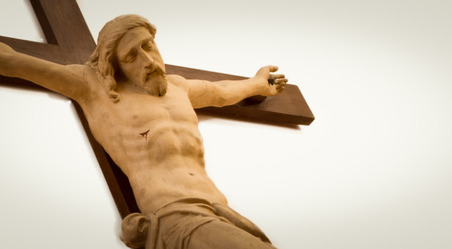
The wonderful works of God among the people of the Old Testament were but a prelude to the work of Christ the Lord in redeeming mankind and giving perfect glory to God. He accomplished this work principally in the Paschal Mystery of his blessed Passion, Resurrection from the dead and glorious Ascension, whereby "dying he destroyed our death, rising he restored our life". For it was from the side of Christ as he slept the sleep of death upon the cross that there came forth the "wondrous sacrament of the whole Church". For this reason, the Church celebrates in the liturgy above all the Paschal mystery by which Christ accomplished the work of our salvation. (1067).

In brief - The sacraments are efficacious signs of grace, instituted by Christ and entrusted to the Church, by which divine life is dispensed to us. The visible rites by which the sacraments are celebrated signify and make present the graces proper to each sacrament. They bear fruit in those who receive them with the required dispositions. (1131)
The Church celebrates the sacraments as a priestly community structured by the baptismal priesthood and the priesthood of ordained ministers. (1132)
The Holy Spirit prepares the faithful for the sacraments by the Word of God and the faith which welcomes that word in well-disposed hearts. Thus the sacraments strengthen faith and express it. (1133)
The fruit of sacramental life is both personal and ecclesial. For every one of the faithful on the one hand, this fruit is life for God in Christ Jesus; for the Church, on the other, it is an increase in charity and in her mission of witness. (1134)
Prayer
The Holy Spirit who teaches the Church and recalls to her all that Jesus said also instructs her in the life of prayer, inspiring new expressions of the same basic forms of prayer: blessing, petition, intercession, thanksgiving, and praise. (2644)
Because God blesses the human heart, it can in return bless him who is the source of every blessing. (2645)


Forgiveness, the quest for the Kingdom, and every true need are objects of the prayer of petition. (2646)

Prayer of intercession consists in asking on behalf of another. It knows no boundaries and extends to one's enemies. (2647)

Every joy and suffering, every event and need can become the matter for thanksgiving which, sharing in that of Christ, should fill one's whole life: "Give thanks in all circumstances" (1 Thess 5:18). (2648)

Prayer of praise is entirely disinterested and rises to God, lauds him, and gives him glory for his own sake, quite beyond what he has done, but simply because HE IS. (2649)