



Articles
Prophet

The Knowledge Which Is "Faith"

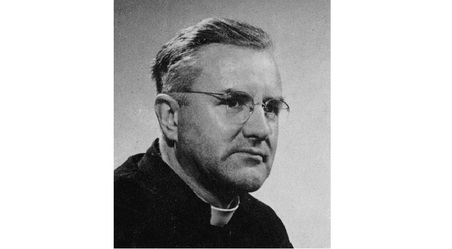
Edward Holloway
"What is faith? Faith is the assurance behind our hopes, the certainty of realities we do not see. By faith we perceive that the universe was fashioned by the word of God, so that the visible came forth from that which is not seen." (Heb. 1 1: 1-3).
Many sterile controversies concerning faith - whether it is an act of the intellect or of the will or a mixed act of both intellect and will etc. - would cease if we thought of 'faith' in its living environment, that is to say in its relationship to God who seeks and is sought by us, who loves and is loved in return. For the intellect does not 'elicit acts' of understanding nor does the will 'elicit acts' of loving. It is persons who think and who love through their minds and wills. The weary incoherence of many a study written about 'faith' would be spared their authors if we would only bear in mind that faith - whether as the individual act of faith or the abiding virtue of faith - is knowledge and recognition in a context, in an environment; and the environment in which men know and love God through their intellect and through their wills is the Living God in Himself. As we are taught by St. Paul: "in Him we live, and are, and have our being" (Acts. 17:28).There is no difficulty at all about knowing some things - like the existence of God - from natural, unaided reason alone and knowing the same thing by faith. You can know a man or a woman as a neighbour, smile, exchange the time of day, put coins in a collecting box when they call to collect for good causes, but you do not know them in the sense in which you would know them if you entered a communion of life and love with them, as if you were to marry them for instance. So in the act of faith the knowledge of nature is taken up into, and becomes the basis of, a different kind of relationship, a personal relationship which also fulfills you in the very order of your own being.Faith is a knowing which is conditioned by the relationship of dependence for fulfilment between us and God. There are many sorts of knowing from nature around us which give us clues and analogies to the nature of 'faith' in God. A new born baby has this sort of knowledge, deriving from dependence of being, when it gropes for and clasps the breast, seeking the first drops of mother's milk. But this, you may say, is surely hope rather than faith ? No - because there is no hope which is not pointed and focused towards a goal. If the hope is not a blind threshing about, a hopeless hope, the seeking and yearning must be directed from an innate knowledge of some sort. Even a bird will migrate year after year with precision to one precise spot, from some inborn power to orientate itself. It is a 'know-how' built into its very being. Hope is already a love seeking and desiring, usually a love which is already real and there, but wants more of what it loves, because its fulfilment is incomplete. Yet all love and all hope is guided and focused, and whatever guides and focuses the will can be called in some sense 'knowledge'.This knowledge, which implies an inbuilt dependence in us towards some outside principle which perfects and fulfils us beyond our own personal capacity, can be a very dim knowledge in the beginning. In fact it must be a dim and partial beginning or it would not be 'faith'. It is built upon a certain natural power and need to seek, to seek in the order of our spiritual nature, which means to seek through the mind and the heart, through knowing and through loving. But although this seeking arises within our nature, the fulfilment we seek is not one with us. This seeking of ours in mind and in heart and communicates to us and prompts further yearning, deepening us in a knowledge of God Himself and a love of Him which not only gives joy, but makes the soul grow, develop and increase in power in its very self as spiritual being.We find a likeness in the infant who 'knows' in some way before it can reason that its mother is its source of life, joy, and comfort and seeking for the milk of life from her. St. Peter, inspired not by academic studies couched in ear-cracking technical language, but inspired by the Holy Spirit, used the same analogy: "Beloved, like new born babies crave your true milk without guile, so that you may thrive upon it to your souls' health. For you have tasted the Lord, that he is sweet" (1. Peter. 2:2-3).

Faith: Development of the Spirit in Wisdom

Faith is not the sort of knowledge we gain from physics, chemistry or electronics, for example, the sciences through which we understand and dominate the world around us. We are in ourselves bigger and deeper than the material order of physical energy, which is why we can, so to speak, stand over it, grasp it totally and use its secrets in an age of technology to make so many things for our partial fulfilment, (and also for our danger and destruction). Faith is not that sort of knowing. Faith is like getting to know one whom you love. And that is a slower, less easy sort of knowledge, but it is the only sort of knowledge which fulfils you from within yourself, just as the love which is born out of that sort of knowing is the only fulfilment which completely satisfies your human person. If getting to 'know' and to 'love' another human person is a process which is partial, dark and gradual, how much more is it so when what you seek to know, to love and to lay hold upon in communion of being, is the source of all mind and love, who is infinitely above you and superior to you!In the book of Proverbs among the things which the seer names as "too wonderful for me to follow" is "the way of a man with a maid." (Prov. 30:19). He is right, for man and woman are made for each other in body and in soul and in a mutual complementary psychology of being. There is a dependence here, a coming to know which is of very nature, but which is hard to fathom and to follow in all its relationships. How much more so with God. God is not dependent towards us in His very Being, as male and female are to each other. Rather we are totally dependent on God not only for very existence, but for fulfilment in the spirit, in our inner wisdom and joy, in that inner love which is bliss.Faith then, like the charity which grows out of it, is God-prompted, God-revealed and God-given. Only God can communicate Himself as the Lover to be known, loved and held. The seeking is of nature, but the prompting and answering by God take us beyond the power of nature and the order of our nature. It takes us into the very sharing of the Divine nature. Yet it is our only fulfilment and the thing we are made to grow up to as 'babies' in God. It is the milk which alone answers our new-born cravings and once it is given it becomes the principle of our growth in the likeness of God, in that divine order which is eventually to know and love Him as He is in Himself.Christ Himself likened faith to a seed - to a mustard seed, the very smallest of the seeds - and this simile has a great perfection in making us see what 'faith' is, and how 'faith' is generated in the soul. The English language has a very beautiful and sensitive word - "Springtime". The seed deep down, latent in the cold and dark earth really does 'spring' in its upward thrust to its paschal season of life and of life more abundant. The frail shoot of life, brimful with a dim, innate 'knowledge' of the sun that is above it and which is the 'draw' that pulls it on, thrusts up with the imperfect love which is 'hope' to the source of its life and its harvest. This is the sort of relationship we mean when speaking of knowledge within a context and knowledge within an environment. For the being of the seed and the being of the sun are inter-defined towards each other. They are made for each other. It is the same with God and us. Not that He is not made for us indeed, but we are made for Him and He is our sunshine - the principle of our life in the springtime of life, and the principle of our harvest time (please God in His mercy) in the finality which is Heaven.

Faith as Fulfilment and Friendship

It is clear that we cannot lay hold on God from our tiny, limited being. If a new born baby cannot find mother and mother's milk unless she first bend to him and give him the breast, it is just so with us and God. A mother who fed us in the first weeks of life and was the source of our being and growth can also, through the years, become a most loved and revered friend. In the same way God is all things to us. God is the source of our being, our nourishment, our wisdom, our good and our total and lasting joy. Here indeed is a knowing and a loving within a context and within an environment!We cannot exhaust that source of life who is the Bread of Heaven for us. We cannot plumb that vast wisdom to its depths which threw the universe across aeons of space and time and growth of being, (and this is the least of the achievements of the Living God). We cannot lay hold on all that joy in that vast Love who is the Alpha and Omega, the beginning and final end of all loving and all loves. God must commune with us, touch us from within, nourish us by the creative good will of the divine being, whose very good-will to us is itself life-giving and grace giving.Faith is a getting to know God as He is in Himself. Therefore it must be dim, incomplete and partial. Also it must be the supreme thrill of all our life and being. The seed which is springing upwards to the sun thrills to the sunshine in every atom of its life. So do we to God, for we are made for Him and we live from the inner man in union and with Him alone. This communication of who and what He is and how He is given to us; of what we mean to Him and to each other for His sake; all of this is the measure of the vast economy and plan of God in its wisdom its power to fulfil.When we speak of the full measure of the field in which faith operates - whether in the individual, personal spirit, or upon the field of all mankind as a whole both now and throughout history, past and future - we are speaking of the total working of God in the Church. And when we write 'the Church' we include the whole sweep of God's self-revealing to mankind all the way from Adam to Christ and up to this very day. For the Church does not stand without Christ, nor is Christ an episode in the Church. Christ lives and works in the Church in a personal manner, with the Father, through the Holy Spirit of them both.Therefore when we speak of 'faith' we acknowledge an interior and personal union of God with the individual spirit and to this infusion, or touch of the Divine, the soul responds. Or rather it is better to say that it is the person who responds, for the whole man, body and soul, responds in the deepest centre of our powers . When does this process begin ? I would say in the womb, from the first moment of individuation of a living person, but would not wish to dwell here on such a vast consideration. It is most certainly active at Baptism, because it is the teaching of the Church herself that faith, hope and charity are infused in the very making and accepting of a newly baptised infant as a son or daughter of God. God is 'drawing' and enlivening this person in the powers of their spirit, and even the body is being 'drawn' to God through the central powers of a man's spiritual being.This then is the first beginning of faith as a state, habit or virtue in a Christian man or woman. After that, even in the individual person, we must say that as the years go by it will be a question of: "and of His fulness we have all received and grace upon grace" (John. 1: 16). The inner word of comprehending God will grow by the raising of the mind and heart to God. The love of God, the state, habit or virtue of 'charity' will follow as necessarily, one might almost say (in order to make a point) as the Holy Spirit must proceed from the Father through the Eternal Word. And the virtue or state of hope will also be there as the mind and will seek for more with a greed that is holy, not disordered desire. For the desire for God is greed that is holy and its name is 'hope'.The state of grace - of life and growth in God through the divine indwelling - cannot be enlivened within us by God without these virtues of faith, hope and charity. There must be a basic 'yes' to God from the inner man and an orientation of the human personality through mind and heart to God who is the true and wise, the good and the loving. This relationship to God through the powers of the intellect and the will gives us 'faith' and 'charity' with ‘hope’ as the hybrid product of at least the will, and more probably of intellect and will together - since the spirit yearns to know more as well as to love more.In a child this quality of faith and charity can be very vague from an adult viewpoint, but full of dynamic energy and of even a contemplative union without clear words and concepts. In the simple, untramelled soul everything around, everything that gives joy and happiness can and will lead to God. As it is written: "The Spirit of the Lord has filled the whole earth, and this orb which holds all things has knowledge of His voice" (Wisdom. 1:7). This fact can be used in teaching and in catechising, for the law of God which infuses all creation is a good law and works to good. The law of sin in creation is a secondary and an extraneous law, brought in by the will and the fall of man (cf. Romans. 7:21 27).This exulting of the human spirit towards God, from the very goodness of creation and its beauty - for life, health, happiness and love - can be for many a youngster, who hears or knows nothing or next to nothing about God or His Christ, the prompting principle of a baptism of desire and of an innate love of God. For us, in the school and in the catechism class, the bubbling joy of young exultation in life and in being can be the starting point for a deepening of the knowledge of God and of the love of God.It goes almost without saying that the happiness of the good Catholic home, with its respect for the words of 'mum' and 'dad' and of love for them both, leads of its very order, ( not by nature alone but from the grace of matrimony), to the more conscious, more explicit, personal love of God. This will be the more so when parents say morning and night prayers with their young children at their bedside. Through all the many ways by which God 'gets through' to men and awakens them through the spiritual powers of the soul, let us remember that a basic faith and a basic love is born in the family. Even outside the Christian fold this is still the first catechumenate of Christ and it is precious.

The Fullness of Faith

Faith, we have striven to say, is not an external assent only, not merely a belief upon an external authority. This aspect of faith is also valid, for when the God who is the sunshine of human fulfilment, but incomprehensible in Himself in all His majesty, is spoken to us in the clear word of priest and prophet, through social and communal revelation in the Church, there will be many things which we cannot fully understand but still give assent to. The doctrine revealed can nonetheless be clear, above all since the Coming of God in Christ to this creation, because the Eternal Word made flesh has mediated to us a spoken word which is crisp, clear and very definite - like the doctrine of the Eucharist or the Holy Trinity. We can assent, but we cannot fully understand and some people will not be able to understand explicitly from any inner principle of knowing at all, because their inner appreciation of revelation is so unformed.It is important, however, to stress that with the exterior word of revelation, there is also accompanying it this interior 'word' of knowing and loving God, according to our lights, within the individual mind and heart. I would not think it was the obligatory teaching of the Church, but would suggest that wherever the interior virtues of faith and charity abide, there is, however dimly, in no matter how seminal a condition, a state of union, a state of contemplation between the spirit and its God. That is why one said in the beginning of this article that faith was a personal 'knowing' of God in a dark and dim way, like the seed thrusting upwards to the sun it has not yet 'seen'.Faith is that activation of the spirit, through the intellectual powers of the soul, which springs to life when God touches and draws the spirit to recreate it and to redeem it. In that order there can be an immense growth. And of its nature that order of 'revelation' - which is an offer from God of a personal knowledge of Him and a personal love of Him - must grow through all the many ways open to men and needed by men.We must therefore expect and presume the union and communion of God with men through space and time, through history and society, through priest and prophet. And what a majestic theme this is. This is the surge of God's communion with men, until it is crowned in the Incarnation of the Eternal Word, our God in Person, who fulfils all in all, from the fetus in the womb to the entire People of God as Church and as Community in heaven and upon earth. For us who are given the fulness of the Word in Christ, and the fulness of the same Living Word in the magisterial teaching of the Church, there is possible, and should be achieved within us, a living joy.There is for us a personal sense of blessedness with awe for the majesty of the ‘Sacrament of the Universe’, the dispensation of God that is in Christ. His care and His love extends across the whole People of God - those in heaven, those in the state of expiation, and those still pilgrim upon the earth. It reaches out to the fetus barely conceived in the womb: "Thou didst knit me together in my mother's womb . . . and hast patterned me in the depths of the earth" (Ps. 139:13-15). Even in this deep darkness, the darkness of the seed of human life latent in the earth, even if the upthrust of its springtime should be shattered by the murdering hands of men, one yet dares to hope and believe it will find its sun and its Saviour at the end of the world. Even though its beginning was lacerated in the wintry soil of human sin: "If I make my bed in Sheol, again I find Thee ... even there thy hand will meet me, thy right hand will hold me fast" (Ps. 139:8-10).So, at the end of our reflecting upon faith as an act, faith as a virtue, faith as a state or manner of being in the human spirit, we return to the initial theme. Faith is a knowing because God in person offers Himself to us as persons. Hope is a knowing and a desiring which is incomplete in both orders, of the intellect and of the will. Hope is hungry in both ways, to know more and to love more. Charity, or love, is personal union and communion with God, not so much the act of a faculty as the response of our whole being in joy to its fulfilment in both knowing and possessing.There can be some sort of faith even when one has lost the grace of God and is 'dead' to Him through true mortal sin. But the charity of which St. Paul writes (cf. 1Cor 13) is that living charity in which God the Truth is savoured as wisdom and possessed in the uinion of joy. Faith will 'pass away' only to be completed in vision; and faith is already seeing in a certain sense, but through an opaque mirror in a dark manner.Faith - whether as the external word of God revealing in the economy of Christ from Adam to the Parousia, or in the inner word of the soul knowing and loving God through the years of life as best we may - this faith must be the gift of God. We cannot work it out, because we cannot work God out. We cannot ascend to God and bring down the word; the word must descend to us in priest and in prophet and finally in Him whose personal name is the Word of God. This communication of love is again a gift. It is the possession in Himself of all that is beautiful, all life-giving, all joy-giving. We cannot earn it or demand it of ourselves alone. Like the new born baby we are made for it; we can cry, we can yearn, but He must bend down and extend his cherishing. For faith, hope and charity are a relationship to God in a context - in a seminal context.Unfortunately, perhaps, we cannot see a soul nor analyse a spirit. Too many people think of the psyche of man or woman as 'finished' in its own right and nature and fulfilled in an external way by the 'vision' of God. It is rather as if they conceive of heaven as a ticket to see the supreme wonder of creation, as one tours to see ‘the seven wonders of the world’. It is not like this. Heaven is not a final extra to our creation. If we could see the souls as God sees men we would see in the whole personality of this or that man or woman, a seed, a baby just born. We would see at the font a baby in soul as well as a baby in the flesh with all its potential for natural growth. We would see also a spirit, born and now reborn, but wanting to grow in spirit to the proper stature of its manhood or womanhood in the order of Jesus Christ. Faith, hope and charity, these three are the health and abundant life of that growing up. A child is only part matured in its development, and in our relationship to God we are as yet still children. In the personal order of grace and in the full social order of the Church and its sacramental life, the spirit also is maturing from darkness to light, from liking to a final loving.The mystic saints give us some glimpse of what this process of attainment should be. We should through 'faith' come to savour the Lord in a deepening wisdom and understanding of His reality, His very self, and His plan in creation. We should savour Him in an ever increasing wisdom which is a permanent joy of love. We should taste and see that Our Lord is sweet. This is charity as joy, but charity is proven by deeds or the joy is superficial. "If you do love Me, then keep my commandments" (Jn 14:15). He did not say 'appreciate my values'. He said obey and then you shall enjoy.If there is one meeting place where the waters of private, inner knowing and loving in prayer and in 'faith' meet the great sea of public, social revelation of God in scripture and in Christ Revealed, then it is in the Holy Eucharist - the consummation of the personal and the public gift of God in His Only Son. That is why all the Eucharistic Prayers have the same doxology: "Through Him, with Him, in Him, in the unity of the Holy Spirit, all glory and honour is yours, Almighty Father, for ever and ever". To which the angels and saints in heaven respond ‘Amen’; the holy souls expiating, learning and loving to perfect health, respond ‘Amen’; the people of God, pilgrim and striving upon earth respond ‘Amen’. This is the threefold ‘Amen’ of all creation, explicit in the liturgy of the East, and one wishes it were explicit in the liturgy of the West.And faith ends at the end of the journey, for faith is a travelling on and ends when the threshold is crossed and the homecoming ends in vision and embrace. Hope ends on the same threshold, as it did for holy Simeon: "for my eyes have, seen the Saviour whom thou hast prepared for all the peoples: the light of God's revealing to the Gentile, the glory of Israel thine own people". (Lk 2:29-32). Charity does not pass away, for charity is knowledge beckoning and love desiring. As Father, Son and Holy Spirit are defined mutually to each other through intellect and will - through knowing and loving - so charity, or love, is one's very self knowing and desiring in the state of grace and union with God. And we don't pass away, we enter upon our eternal inheritance, when the pledge given in the Eucharist, - the union and communion with God of this One Bread and Cup - passes into the most total communion of being and life in love that even God can give. Charity never passes away, but it is fulfilled.

Therefore the Church in the celebration of the Eucharist looks up, through this One Bread and Cup, and murmurs with Isaiah in the season of Christ's advent and birth as Man: "Drop down you heavens the dew from above, oh let the clouds rain down the Holy One; let the thirsty earth be opened, let it bud forth the Saviour"(Is 45:8 ). We may be forgiven if we add with St. John. "Come quickly Lord Jesus". (Rev 21:20). For He is the full sight, of which 'faith' is the insight.